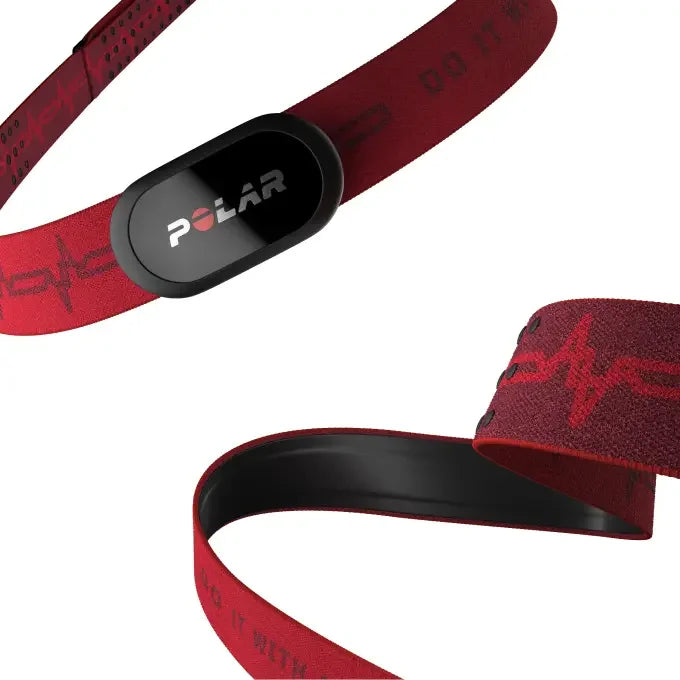
FlexBeam Red Light Therapy in India: Does It Work?
Quick answer: FlexBeam is a wearable red and near-infrared light therapy device made by Recharge Health in Norway. You strap its three light pods over a sore knee, shoulder, lower back or muscle and run a 10-minute program. At WOD Armour it costs ₹69,990 at the time of writing, in white or black. The research on red and near-infrared light (called photobiomodulation) for muscle soreness and knee pain is promising, but the results are mixed and depend on the dose. Think of FlexBeam as a low-risk, hands-free tool for targeted aches and recovery, not a cure-all. It suits one or two problem areas treated most days, not full-body coverage or tight budgets.
What is FlexBeam?
FlexBeam is a strap-on device. Three light pods sit on a silicone strap and fasten to your body with velcro bands, so you don't have to hold anything or sit in front of a panel. Here are the key specs from Recharge Health:
- Wavelengths: red at 610–650 nm (peak 622 nm) and near-infrared at 800–850 nm (peak 814 nm)
- Irradiance: up to 110 mW/cm², pulsed
- Programs: 3 presets of 10 minutes each, with automatic shut-off
- Battery: separate rechargeable battery pod; Recharge Health quotes 5–8 sessions per charge
- Build: 775 g, with built-in fans to keep the LEDs cool
- In the box: carry case, three velcro bands, power supply with adapters, safety goggles, a printed guidebook and access to the companion app
Recharge Health lists FlexBeam as a Class II, FDA-exempt medical device in the US. That is a regulatory category. It doesn't prove the device treats any particular condition.
How red light therapy works
The leading explanation is that red and near-infrared light is absorbed by an enzyme in your mitochondria (cytochrome c oxidase). Researchers think this raises cellular energy (ATP) production, dampens oxidative stress and inflammatory signalling, and releases nitric oxide, which improves local blood flow. A 2025 review describes these mechanisms as plausible but "incompletely understood."
Two practical points matter more than the biology:
- Red vs near-infrared: visible red light acts mostly in the skin. Near-infrared reaches deeper, which is why muscle- and joint-focused devices pair the two.
- Dose matters: results depend on wavelength, power, time and how often you use it. More light isn't automatically better.
Does red light therapy work? What the evidence says
1. Muscle soreness and recovery: promising, with caveats
A 2015 meta-analysis in Lasers in Medical Science (Leal-Junior et al.) reviewed 13 good-quality randomised trials. Applying red or infrared light (laser or LED) before exercise increased repetitions by about 5.5 and time to exhaustion by about 4 seconds compared with placebo. The most consistent results came with red/infrared wavelengths applied before training.
For delayed onset muscle soreness (DOMS), a 2025 systematic review and meta-analysis (Tsou et al., Journal of Functional Morphology and Kinesiology) found 14 studies but could pool data from only four. Those four showed a moderate drop in soreness at 72 and 96 hours and better strength recovery at 24–48 hours. Four of the 14 studies found no effect, though, and light therapy didn't speed recovery of jump or agility performance.
2. Knee pain: the strongest clinical data
A 2019 BMJ Open meta-analysis (Stausholm et al.) pooled 22 placebo-controlled trials with 1,063 people with knee osteoarthritis. On a 100 mm pain scale, laser therapy reduced pain by about 14 mm more than placebo by the end of treatment. At the recommended doses the gap was about 19 mm, and it peaked at around 32 mm two to four weeks after treatment ended. Major guidelines still don't recommend it, and these were mostly clinic laser trials, not home LED wearables. FlexBeam's 814 nm near-infrared peak falls within the 785–860 nm range the authors highlighted, but the device and dosing are different.
3. What independent testers say
We couldn't find an independent peer-reviewed trial of FlexBeam itself. Hands-on reviews are cautiously positive:
- A Wareable reviewer used it for 10 minutes most evenings on a sore shoulder. The pain went away after a couple of weeks, but the reviewer admitted they couldn't tell whether that was the light or time.
- Active Gear Review called it "not a miracle device, but more of a wellness assistant."
- On Reddit's r/redlighttherapy, some owners report relief for neck and knee pain. Others find the hard plastic pods clunky on small joints like wrists.
4. Where the claims run ahead of the science
Online marketing for red light devices often lists immunity, gut health, hormone balance and better sleep. The evidence for any of that from a small wearable is much thinner. Buy FlexBeam for targeted muscle and joint use, and treat anything else as a bonus.
Is red light therapy safe? Eyes and Indian skin
- Eyes: Recharge Health says not to use FlexBeam on the face or head because the light can damage your eyes. Wear the included goggles and don't look into the pods.
- Darker skin: two randomised safety trials (Jagdeo et al., Journal of Biophotonics, 2020) found LED red light safe up to 320 J/cm² for skin of colour. One participant blistered at 480 J/cm². Mild, temporary darkening of the skin was more noticeable in darker skin and faded within three months. By our own calculation from FlexBeam's stated maximum of 110 mW/cm², a 10-minute program delivers at most about 66 J/cm², well under that level. Stick to the guidebook programs rather than stacking extra sessions on the same patch of skin.
- Check with a doctor first if you are pregnant, take photosensitising medication, have a light-sensitive condition, or have a history of skin cancer or a tumour near the area. The safety trials excluded people in several of these groups. Light therapy is also no substitute for diagnosing an injury.
How to use FlexBeam in a training week
- Placement: strap it directly on bare skin over the target area and pick a preset. If you lie back, keep the fans clear so they can cool the pods.
- Before training: the 2015 meta-analysis found the most consistent benefits when light was applied before exercise. Try 10 minutes on your quads before a squat day or on your shoulders before overhead work.
- After hard sessions: use it on the muscles that will be sore the next day, and again over the following 48–72 hours when DOMS peaks.
- Consistency: Recharge Health says most users start noticing effects after about three weeks of regular use, so judge it over a month, not one session.
It pairs well with heat, compression or massage tools (see the table below). Our guide to recovering faster after leg day covers the basics that matter most: sleep, food and sensible programming.
FlexBeam vs other recovery options
Prices are at the time of writing. WOD Armour prices are from our store; other prices are from each brand's Indian website.
| Option | How it works | Best for | Price |
|---|---|---|---|
| FlexBeam red light therapy device | Wearable red + near-infrared LEDs, hands-free, 10-min programs | Targeted knee, shoulder, back or muscle sessions | ₹69,990 (WOD Armour) |
| Handheld red light (e.g. Ultrahuman Photon) | 660/850 nm, held 2–4 inches from the skin | Lower cost; you have to hold it | ₹24,999 (Ultrahuman India) |
| Small stick-on light pods (e.g. Curapod) | 660/850 nm pods attached with patches | Small spots and the tightest budgets | ₹8,399 (Litemed) |
| Hyperice X 2 Knee | Hot/cold contrast + compression | Knee soreness and swelling after training | ₹54,990 (WOD Armour) |
| Hyperice Venom 2 Back | Heat + vibration wrap | Stiff lower back | ₹29,999 (WOD Armour) |
| Theragun Prime 6th Gen | Percussive massage | Knots and warm-ups for large muscles | ₹31,999 (WOD Armour) |
If knee pain is your main issue, compare FlexBeam with heat-and-cold options in our Therabody RecoveryTherm Knee guide. For heat and vibration devices, see our roundup of heat and vibration therapy devices in India. If tired legs are the problem, the Normatec compression boots guide is a better fit.
FlexBeam price in India: what to check before you buy
- Price: ₹69,990 at WOD Armour at the time of writing, in white or black. Stock is limited, so check the FlexBeam product page for current availability.
- Payment: cash on delivery only covers orders up to ₹20,000, so pay online or use the EMI and Pay Later options.
- Delivery: free shipping, delivered in 2–7 working days, with a GST invoice.
- Returns: electrical recovery devices, including FlexBeam, can't be returned. Ask us anything before you order, and get the warranty terms confirmed in writing.
FAQ
Does red light therapy really work for muscle recovery?
Partly. Meta-analyses show modest benefits for endurance and repetitions when light is applied before exercise, and moderate reductions in soreness at 72–96 hours. The studies are small and mixed, and most used clinic lasers or LED clusters rather than home wearables.
Is red light therapy a hoax?
No, but it's often oversold. There's real research for muscle soreness and knee osteoarthritis pain. Claims about immunity, hormones or gut health from a small wearable are poorly supported.
Does red light therapy help knee pain?
A 2019 meta-analysis of 22 placebo-controlled trials found laser therapy reduced knee osteoarthritis pain more than placebo, especially at recommended doses. Results from home LED devices like FlexBeam haven't been tested in the same way.
Should I use red light therapy before or after a workout?
Both are used. The most consistent performance results came from sessions before exercise. The DOMS research looked at sessions after hard workouts.
How long does FlexBeam take to work?
Each program lasts 10 minutes. Recharge Health says most users notice effects after about three weeks of consistent use, so give it a month before judging.
Is red light therapy safe for Indian skin and eyes?
At normal doses it's generally well tolerated. Darker skin is more sensitive to high doses, with temporary darkening reported in trials. Never use FlexBeam on your face or head, and wear the goggles.
Is red light therapy the same as an infrared sauna or a heating pad?
No. FlexBeam uses specific red and near-infrared LED wavelengths and isn't designed to heat you. Saunas and heating pads work mainly through heat.
What is the FlexBeam price in India?
₹69,990 at WOD Armour at the time of writing. Cash on delivery isn't available above ₹20,000, but EMI is.
The bottom line
FlexBeam is a well-built, genuinely wearable way to put red and near-infrared light on a sore knee, shoulder or back, and the research behind the approach is real but modest. Buy it for consistent, targeted sessions on one or two problem areas, and give it a month. Don't buy it expecting a miracle.
Not sure if it suits your training or injury history? Explore the FlexBeam wearable red light therapy device or browse our full recovery range. You can also call our Gurgaon team on 98992 76514 or 84488 66514, and we'll help you choose.